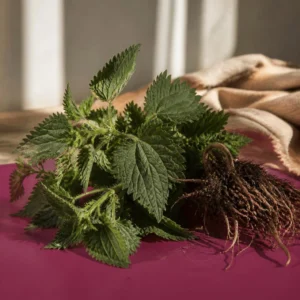
Nettle Extract Benefits: History, Science & Seasonal Support
What if one of Britain’s most familiar plants could be much more than just a stinging weed?
FREE UK delivery or next day UK Delivery £1
Home » Nettle Extract Benefits: History, Science & Seasonal Support
What if one of Britain’s most familiar plants could be much more than just a stinging weed? Stinging nettle has been used for centuries, valued as a nutrient-rich plant with a fascinating history and a wide range of traditional uses. Today, nettle extract continues to attract interest for its concentrated plant compounds and potential role in seasonal wellness.
So, what makes Urtica dioica so interesting? From ancient traditions to modern research, discover the history, science and benefits behind this versatile botanical – there’s so much more to stinging nettle than its sting.
Did You Know? 5 Fascinating Facts About Nettle
What is Nettle Root Extract (Urtica dioica)?
In published literature, Urtica dioica — commonly known as stinging nettle — is recognized as a traditional botanical with a long history of use for year-round immune and upper-respiratory comfort. Its roots are naturally rich in active plant chemistry, including phytosterols (such as beta-sitosterol), lignans, bioflavonoids, and unique root lectins. In traditional herbal practices, these root compounds were valued for supporting seasonal comfort both before and during pollen season, as well as during times of indoor environmental irritation and winter weather changes.
When researchers analyze nettle root extract in published clinical trials and laboratory models (such as the landmark Roschek et al. in-vitro study and the Bakhshaee et al. clinical trial on seasonal wellness), they focus on how these plantcompounds interact with key cellular pathways:
Histamine Pathway Interaction:
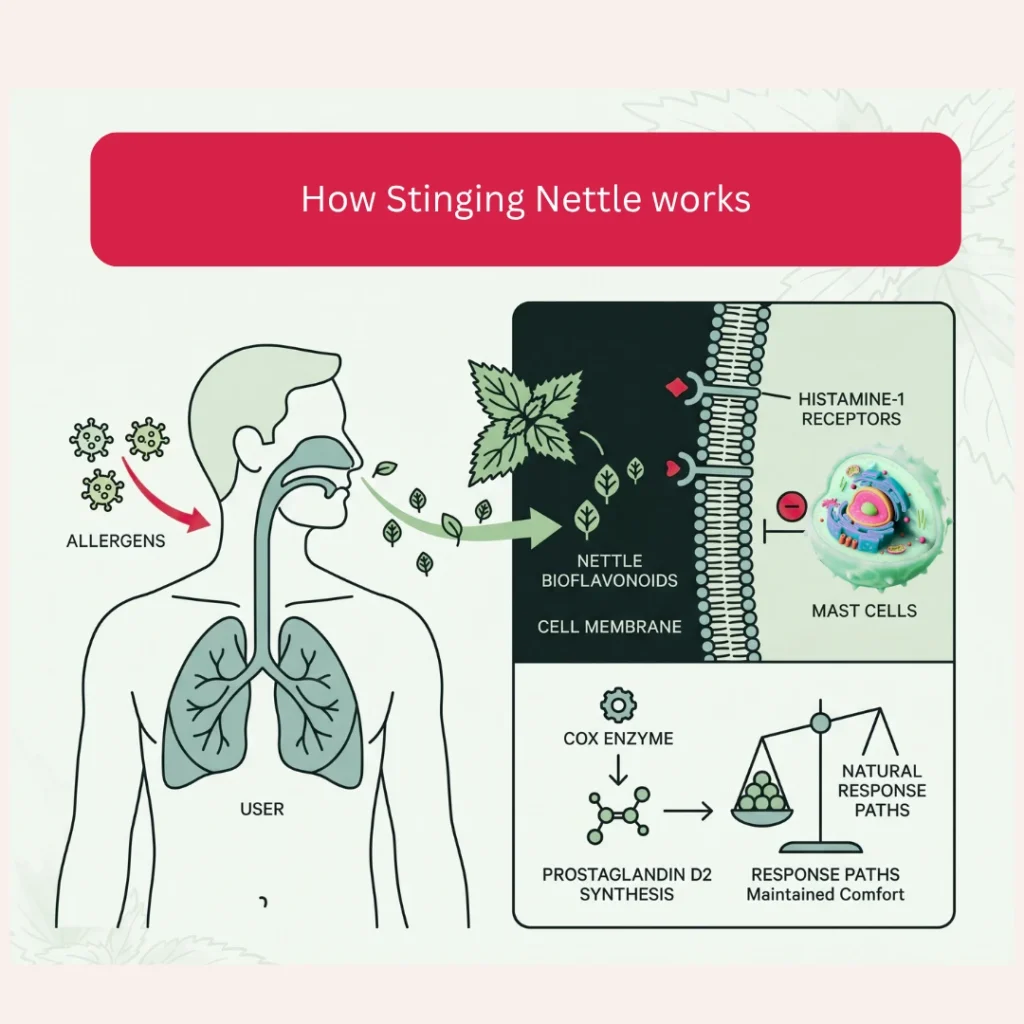
In laboratory cell models (Roschek et al.), nettle bioflavonoids bind to Histamine-1 receptors. This gives us a clear scientific picture of how the plant interacts with natural histamine response pathways triggered by pollen or indoor allergens like dust mites and pet dander.
Enzyme Balance:
Nettle helps moderate an enzyme called mast cell tryptase — the specific signal evaluated in research surrounding cellular response during environmental exposure.
Allergic Rhinitis Pathway Research:
In clinical human literature evaluating seasonal upper-respiratory comfort (Bakhshaee et al.), scientists specifically measure markers associated with allergic rhinitis pathways—such as tissue COX enzymes and Prostaglandin D2 synthesis—to observe how nettle root compounds help maintain normal tissue comfort and clear airflow.
Why modern research favors root extract
While traditional herbalism often relied on basic leaf teas, modern botanical research focuses heavily on concentrated nettle root extract. Because roots naturally store lipid-soluble phytosterols (such as beta-sitosterol), unique lignans, and root lectins alongside bioflavonoids, concentrated 10:1 root extracts are widely chosen for clinical research—evaluating seasonal nasal airflow and long-term tissue comfort.
Year-Round Immune & Winter Support
Beyond seasonal pollen support, broader laboratory research highlights stinging nettle root’s natural content of antioxidants, essential trace minerals, and unique lectins (such as Urtica dioica agglutinin), which scientists actively study for their role in supporting normal immune function through the winter months.
While clinical models help map out underlying plant chemistry, the practical takeaway is simple. Incorporating concentrated nettle root extract into your daily routine offers an easy, non-drowsy way to build protective plant bioflavonoids before hay fever season hits, manage year-round indoor triggers, or maintain your body’s natural resilience through changing weather conditions.
Daily Dosage & Best Time to Take
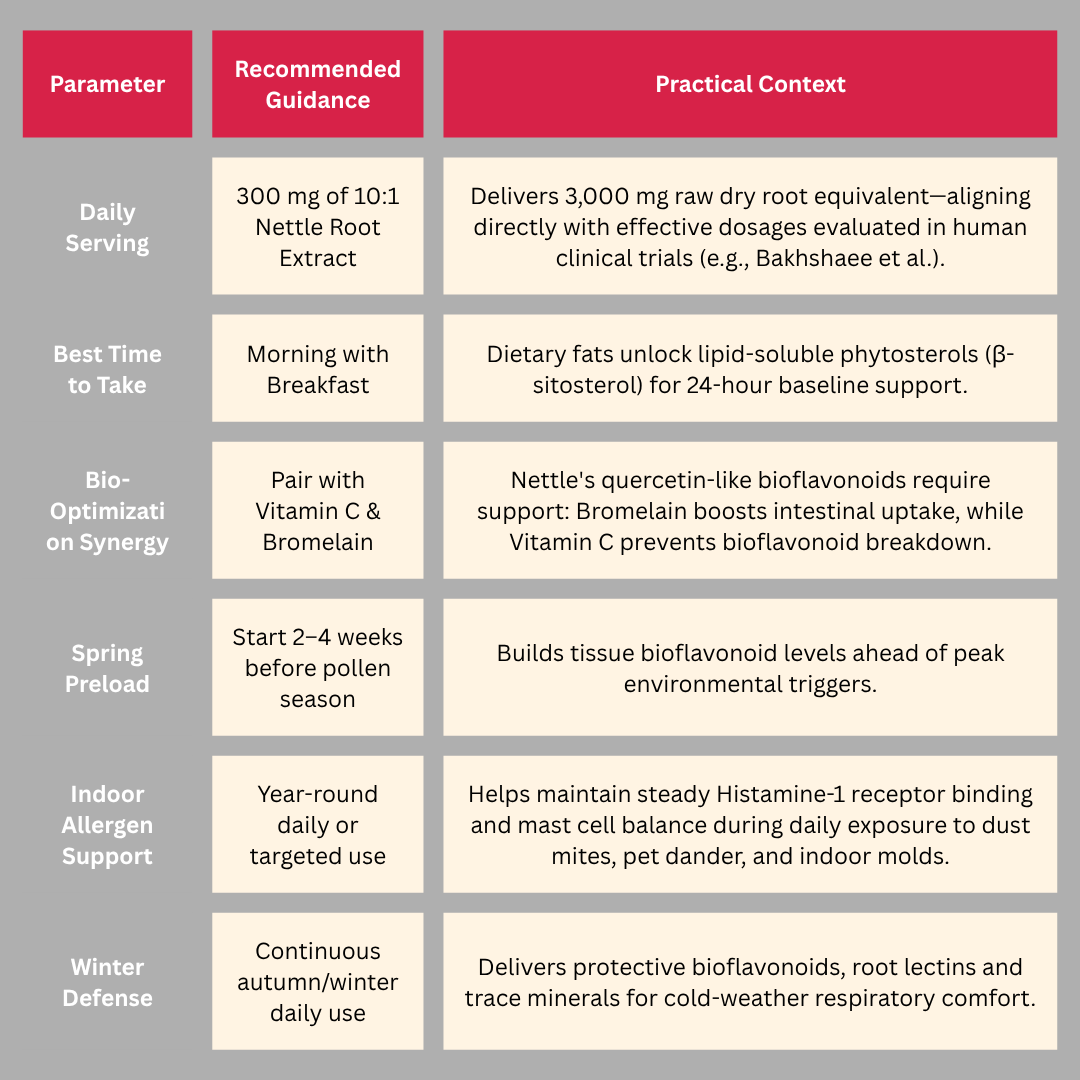
When incorporating a concentrated 10:1 nettle root extract into your routine, daily consistency helps establish baseline bioflavonoid levels ahead of environmental shifts.
Better Together: What to pair with Nettle root extract
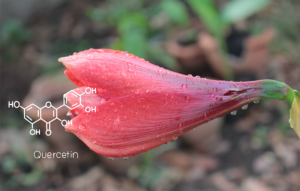
Nettle root extract works even better when paired alongside other complementary nutrients. In high-quality seasonal wellness supplements, you will often find nettle combined with:
Together, these ingredients offer a balanced, multi-ingredient approach to daily vitality.
What to look for in a quality Nettle supplement
If you are considering adding a nettle supplement to your daily routine, here are three key quality checks to keep in mind:
Nettle extract (Urtica dioica) is a traditional botanical used in dietary supplements to support general wellbeing, daily vitality, and seasonal nutritional routines during changing weather or rising pollen counts.
Nettle tea delivers a different botanical profile from a concentrated extract. Hot water alone cannot fully extract the full spectrum of active lipid compounds (like phytosterols and lipophilic flavonoids) found in concentrated root extracts. A concentrated 10:1 extract offers a convenient way to consume a broader range of these compounds in a smaller daily dose.
A 10:1 extract is significantly more concentrated than raw herb powder. It means 10 parts of dried plant material were used to yield 1 part of concentrated extract, allowing a smaller tablet to deliver a higher concentration of active plant bioflavonoids.
Yes, standardized nettle root extract is generally considered safe for daily use by healthy adults when taken according to the manufacturer’s recommended intake guidance. If you are pregnant, breastfeeding, taking prescription medication, or under medical supervision, consult your healthcare practitioner first.
Nettle root extract is well-tolerated by most people. Mild digestive discomfort is rare but can occur with any botanical supplement. Always take tablets with a full glass of water alongside a main meal.
What if one of Britain’s most familiar plants could be much more than just a stinging weed?
If you grew up in the UK, you probably remember your mum or nanny standing over you at the kitchen table, refusing to let you leave until you ate your apple skins because “that’s where all the goodness is!”

HayMax™ Ltd
Postern Piece Farm, Ampthill,
Bedford, MK45 2EX
E-mail : [email protected]
Tel : 01525 406600
© HayMax™ Ltd 2020.