FREE UK delivery or next day UK Delivery £1
Home » What Is Quercetin? Pure Extracts, Bioavailability & Seasonal Protocols
If you grew up in the UK, you probably remember your mum or nanny standing over you at the kitchen table, refusing to let you leave until you ate your apple skins because “that’s where all the goodness is!” Back then, it sounded like a classic parental guilt-trip to get you to finish your plate. As it turns out, she was right.
Fast forward to today: high pollen counts, shifting weather, and a kitchen shelf clogged with half-empty supplement bottles. Finding a seasonal routine that actually works without all the wellness marketing noise can feel like hard work.
While quercetin is widely used to support seasonal resilience and keep natural histamine levels in balance* during hay fever season, plain raw powders often fall flat. They simply do not absorb well on their own.
Understanding how pure extracts work, how to get your body to absorb them, and whether you can take quercetin supplements daily makes all the difference when setting up a routine that delivers results.
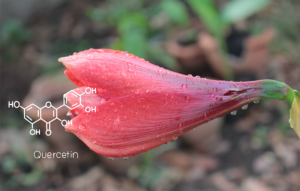
What Is Quercetin?
It Is Pigment.
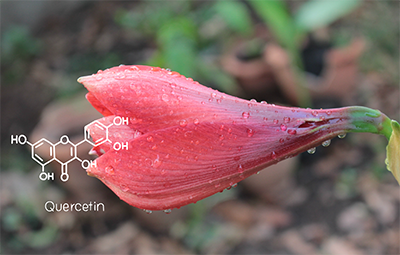
Sophora japonica: the natural source for pure quercetin.
When you eat foods containing quercetin, it acts as an antioxidant to help protect cells from daily oxidative damage. The problem with standard raw quercetin powder is poor absorption. Because the molecule loves fat and hates water, up to 95% of standard raw quercetin passes straight through your gut without ever getting absorbed.
Beyond Plant Protection: How Bioavailable Quercetin Works in Humans
That massive waste in the digestive tract raised an obvious question for researchers: if raw quercetin absorbs so poorly on its own, why do clinical studies show clear improvements in upper respiratory comfort and unblocked airflow?
The answer is simple. Success comes from pairing quercetin with helper nutrients that carry the molecule through the gut wall.
When pure quercetin combines with Bromelain, Vitamin C, and Zinc, absorption increases significantly. Once inside your system, quercetin works across three distinct areas:
The Clinical Science: Multi-Nutrient Synergy & Absorption
Noticeable upper respiratory comfort relies on combining high-density bioflavonoids with an active team of Bromelain, Vitamin C, Zinc, and Stinging Nettle.
1. The Absorption Trio: Quercetin + Bromelain + Vitamin C
Research shows that combining quercetin with bromelain and Vitamin C creates a reliable shortcut in the gut:
When you add elemental Zinc to this mix, clinical tests show clear improvements in key everyday areas:
2. How It Works Inside Your Cells
At the cellular level, quercetin helps regulate how your nasal lining reacts to environmental triggers.
When airborne pollen or dust hits your nose, bioavailable quercetin helps your body produce a helpful protective protein called CC10 (Clara Cell 10-kD Protein).
| Cellular Mechanism | How Quercetin Works |
|---|---|
| 1. Supports Protective CC10 Protein | Research suggests quercetin may encourage nasal epithelial cells to produce more CC10 (Clara Cell Protein 10), a protein involved in maintaining a balanced immune environment in the airways. |
| 2. Modulates Inflammatory Enzymes | Laboratory studies indicate that quercetin can inhibit enzymes such as phospholipase A₂ (PLA₂), which are involved in inflammatory signalling pathways. |
| 3. Helps Maintain Immune Balance | Experimental studies suggest quercetin may help regulate Th2 immune responses, supporting a more balanced immune reaction rather than an overactive response. |
| 4. Supports Seasonal Wellness | By influencing several inflammatory and immune pathways, quercetin has been investigated for its potential role in supporting comfort during seasonal environmental challenges. |
By encouraging your body to produce CC10 and keeping over-reactive immune pathways calm, quercetin helps stop environmental triggers right at the boundary line before a full seasonal flare-up takes over.
3. Adjunctive Support for Upper Airway & Lung Function
Further clinical observations confirm that high-potency bioflavonoid complexes provide powerful add-on support for overall respiratory comfort. When incorporated into daily seasonal routines, quercetin multi-nutrient protocols have been shown to enhance symptom control, support clear lung function parameters, and soothe respiratory tissue irritation in individuals navigating allergic rhinitis and environmental sensitivity.
Standardised Purity: Sophora japonica
Not all plant powders are created equal. Unprocessed whole-food powders usually contain less than 1% actual quercetin by weight.
To put that in perspective, getting a typical 500 mg dose of quercetin purely from fresh apples would mean eating over 10 kilograms of fruit in one sitting. Even your mum would not suggest that.
When shopping for the best quercetin supplement UK options, check the label for pure extracts. High-quality formulas use concentrated extracts from Sophora japonica (Japanese Pagoda tree flowers), standardised to 95% pure quercetin.
With a 20:1 strength ratio, a small daily tablet gives you the equivalent of 10,000 mg of raw plant blossoms in a clean, concentrated format.
Dietary Quercetin Sources
Food sources are great for everyday health, but getting 500 mg of quercetin purely from food during high pollen season is difficult to achieve through diet alone.
| Food | Approximate Quercetin (mg/100g) | Interesting Fact |
|---|---|---|
| Capers | 180–234 (can be much higher in some varieties) | One of the richest natural dietary sources of quercetin. |
| Red onions (raw) | 20–50 | One of the main contributors to quercetin intake in European diets. |
| Fried onions | ≈27–48 | Frying retains a substantial amount of quercetin, although the exact amount depends on cooking time and temperature. |
| Kale | ≈23 | Rich in quercetin as well as vitamins A, C and K. |
| Broccoli | ≈3–14 | Contains quercetin together with other beneficial flavonoids. |
| Asparagus | ≈15 | A good vegetable source of quercetin. |
| Red leaf lettuce | ≈15 | Contains considerably more quercetin than iceberg lettuce. |
| Chilli peppers | ≈30 | A surprisingly rich vegetable source. |
| Cranberries | ≈15–22 | Provide quercetin along with other polyphenols. |
| Blueberries | ≈3–8 | Contain quercetin together with anthocyanins. |
| Apples (with skin) | ≈4–5 | Most quercetin is found in the peel. |
| Black tea | Variable | One of the largest contributors to daily quercetin intake in tea-drinking populations. |
| Green tea | Variable | Contains quercetin along with catechins. |
| Red wine | Small–moderate amounts | Provides quercetin derived from grape skins. |
Although capers are one of the richest natural sources of quercetin, a typical serving is only around 5–10g. Based on published food composition data, this provides approximately 9–23mg of quercetin, depending on the variety and preparation.
By comparison, onions are often eaten in much larger portions, making them a more significant contributor to most people’s daily quercetin intake.
The same principle applies to tea. Black tea contains much less quercetin than capers per serving, but because many people in the UK drink several cups a day, it can make a meaningful contribution to daily quercetin intake.
Building an “Inside-Out” Seasonal Routine
Managing high pollen days works best when you tackle things from both the inside and the outside.
1. Internal Bioactive Support
Take HayMax Clear Allergen Defence tablets as part of your morning routine. Standardised quercetin combined with bromelain, stinging nettle, hesperidin, Zinc, and Vitamin C supports natural histamine and immune balance* without making you feel tired or foggy.
2. External Physical Allergen Trapping
While internal supplements keep your cells resilient, physical barriers stop pollen at the entrance. Applying a drug-free balm like HayMax Allergen Barrier Balm around the rim of your nostrils traps airborne grass and tree pollen before it ever enters your nasal passages.
Formulated for targeted daily supplementation during pollen season:
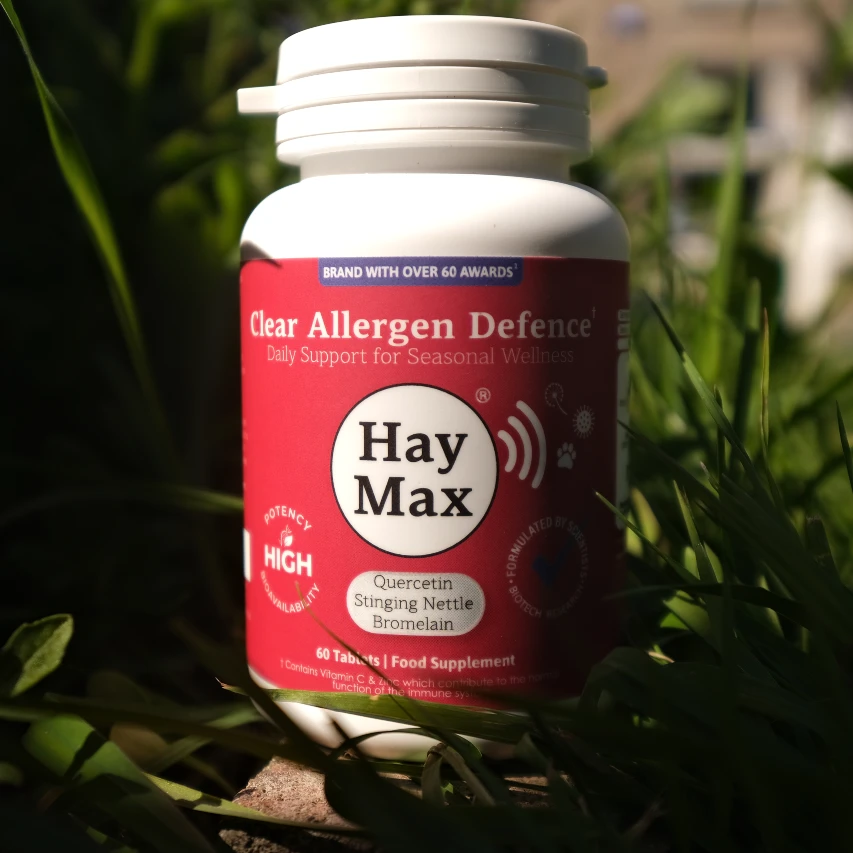
Quercetin molecules are relatively large and hard to absorb on their own. Bromelain works as a natural enzyme helper, opening up pathways in the digestive tract so your body can absorb up to 80% more of the active quercetin.
Average daily diets only provide about 10mg to 40mg of bioflavonoids. Most clinical studies looking at seasonal comfort and immune support use at least 500mg per day to see real benefits.
Vitamin C and Zinc support normal immune function and protect your cells from oxidative stress*, helping your body stay balanced when environmental pollen levels spike during hayfever season.
*Vitamin C and Zinc contribute to the normal function of the immune system and the protection of cells from oxidative stress.
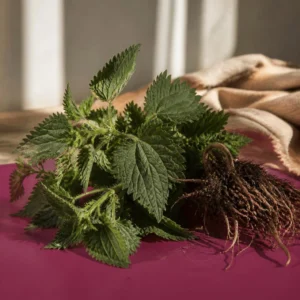
What if one of Britain’s most familiar plants could be much more than just a stinging weed?
If you grew up in the UK, you probably remember your mum or nanny standing over you at the kitchen table, refusing to let you leave until you ate your apple skins because “that’s where all the goodness is!”
HayMax™ Ltd
Postern Piece Farm, Ampthill,
Bedford, MK45 2EX
E-mail : [email protected]
Tel : 01525 406600
© HayMax™ Ltd 2020.